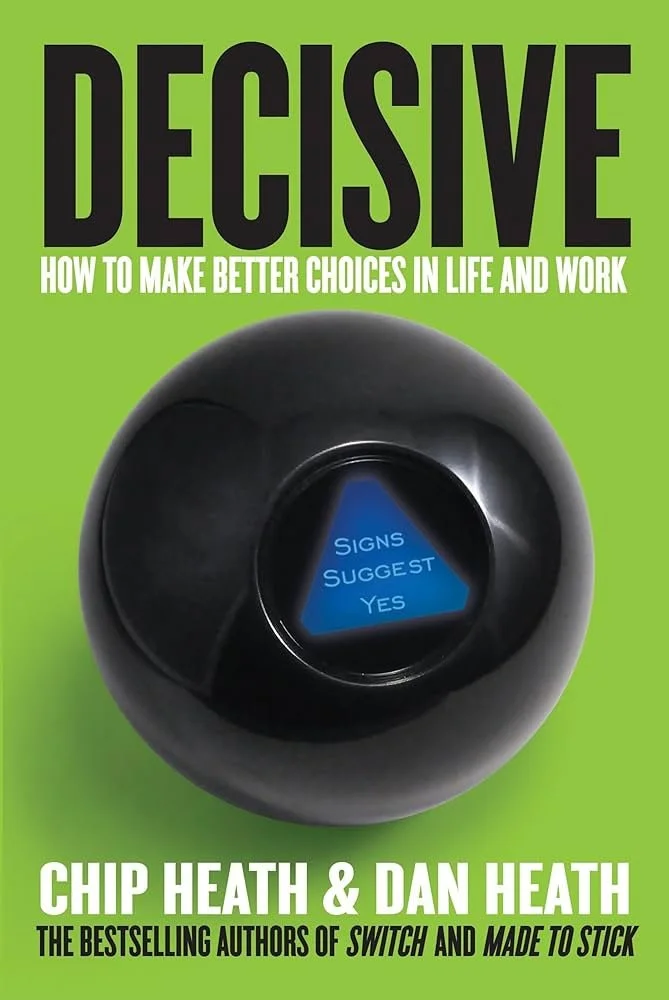
Decisive
Most bad decisions stem from predictable blind spots like narrow framing and overconfidence. The Heath brothers introduce the WRAP framework to counter these biases. A practical application is to widen options before choosing—asking “What else could we do?”—so decisions aren’t trapped in false either/or thinking.
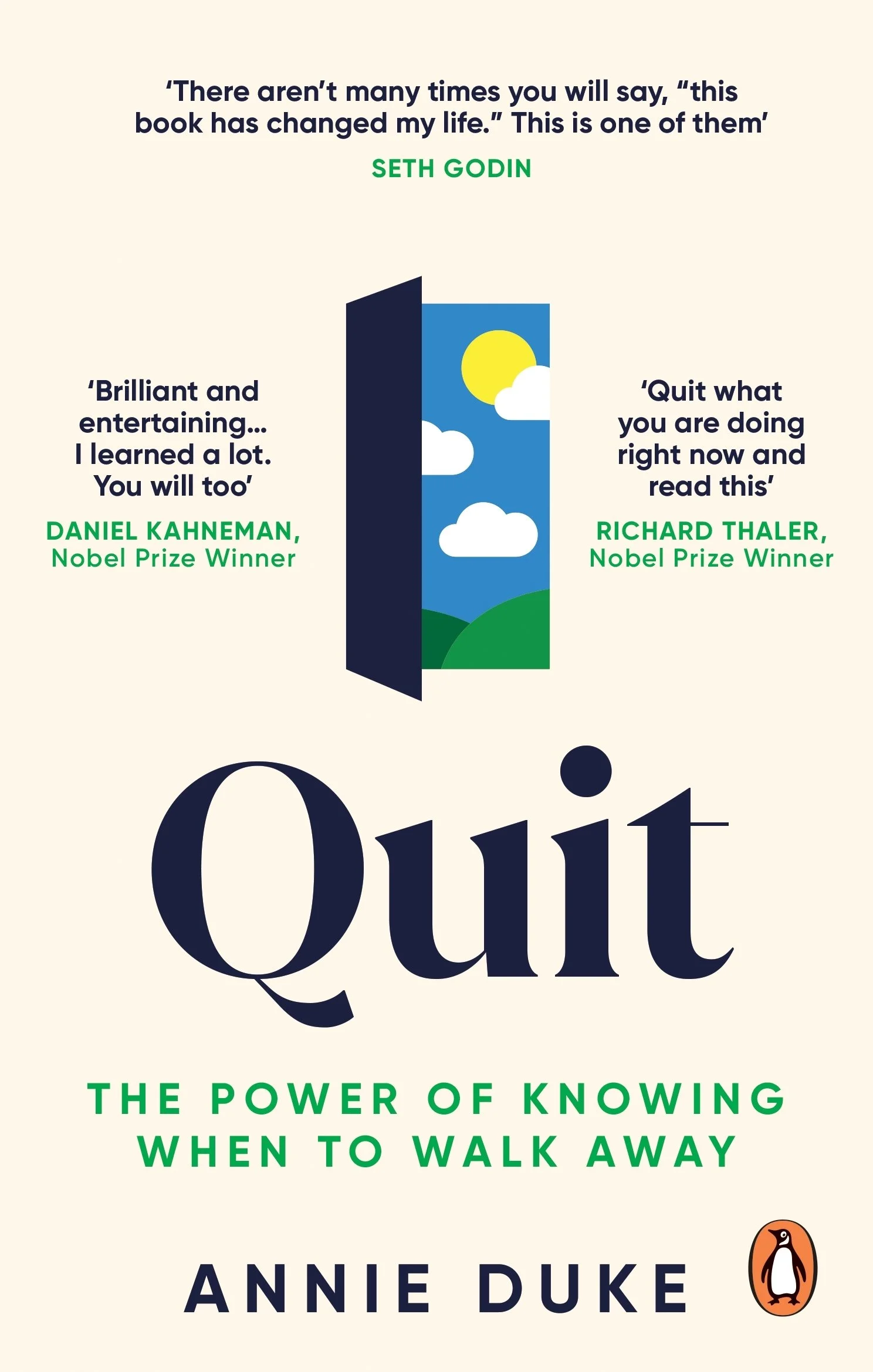
Quit
Grit and perseverance are often viewed in the positive while quitting generally has a negative connotation to it. But what if quitting is sometimes the best thing to do, while “not giving up” can be unproductive, or worse, destructive? This book is filled with practical strategies to help you understand why walking away is so hard, identifying when it’s best to persevere or pivot and how quitting on time often feels like quitting too early.
Thinking Fast and Slow
The human mind operates through two systems: a fast, intuitive system that makes quick judgments, and a slow, deliberate system that handles careful reasoning. While fast thinking is efficient, it often leads to cognitive biases and errors in decision-making. Slow down important choices by questioning first impressions, using data or checklists, and creating space for more reflective thinking when the stakes are high.
Think Again
Success depends not just on intelligence or knowledge, but on the ability to rethink, unlearn, and update beliefs. People often cling too tightly to being right, while the most effective learners stay curious and open-minded. Adopt a “scientist mindset”—regularly questioning assumptions, seeking feedback, and welcoming constructive disagreement—so you can grow, adapt, and make better decisions in a changing world.